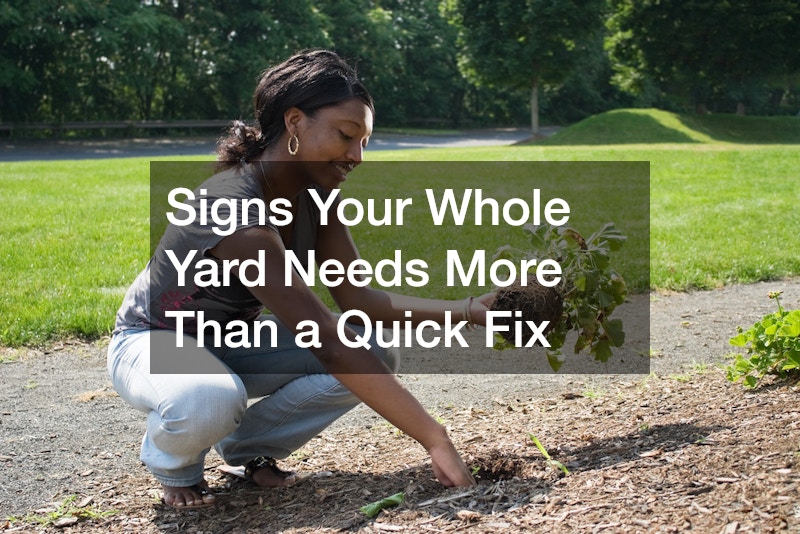
A patchy lawn or a cracked walkway might seem like small annoyances you can patch up over a weekend, but sometimes those little issues are symptoms of much bigger problems lurking beneath the surface. When drainage, structure, and plant health all start failing at once, no amount of spot-treating will fix things for good. Learning to recognize the difference between a minor touch-up and a full yard overhaul can save you time, money, and frustration down the road. This guide walks through the warning signs that tell you it is time to think bigger than a quick fix.
Standing Water That Never Fully Drains
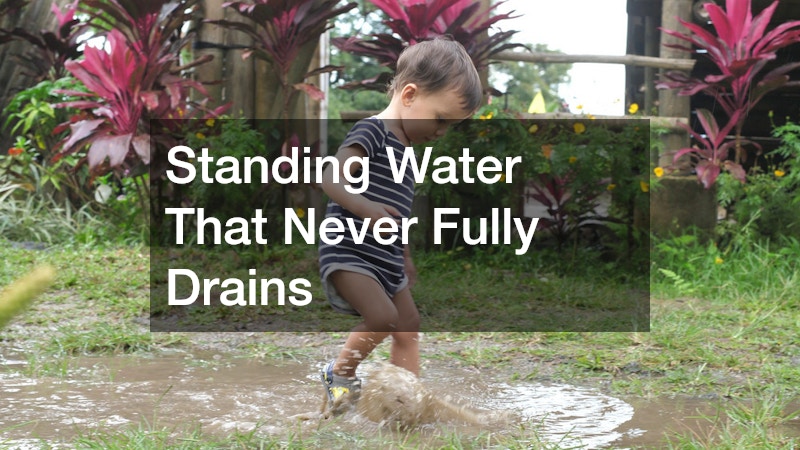
If puddles linger in your yard for more than a day or two after rain, your drainage system is likely failing at a structural level rather than a surface one. This is not just an eyesore; standing water attracts mosquitoes, kills grass roots, and can seep toward your home’s foundation over time. Regrading the yard, installing french drains, or rethinking the entire slope of your property are solutions that go well beyond raking or reseeding.
Many homeowners try to solve this with a bag of topsoil or a quick reseed, but if the water keeps returning to the same low spots, the grading itself is the problem. A comprehensive fix often requires bringing in equipment to reshape the land and redirect runoff toward the street or a dry well. Ignoring it usually means dealing with soggy, unusable sections of your yard year after year.
Cracked or Uneven Concrete Surfaces
Hairline cracks in a walkway are usually cosmetic, but wide gaps, heaving slabs, or sections that have visibly sunk point to shifting soil beneath the surface. This kind of movement often means the base material was never properly compacted or that water has been eroding the ground underneath for years. When you notice multiple areas of your patios or walkways failing at once, it is a sign the whole hardscape layout may need to be redone rather than patched.
Trying to fill cracks with caulk or leveling compound only masks the problem temporarily, and the surface will likely fail again within a season or two. A more lasting solution involves removing the damaged sections down to the base, correcting drainage issues, and repouring or relaying material with a solid foundation, sometimes replacing old slabs with custom walkways designed to handle the site’s specific soil and water issues. If you are noticing this kind of wear across several areas, it is worth having a professional evaluate the entire hardscape footprint before investing in more repairs.
Trees and Shrubs Showing Widespread Decline
A single dying shrub is often just a plant that got too little water or too much shade, but when multiple trees and shrubs across your property show yellowing leaves, thinning canopies, or dead branches, something more systemic is going on. This could point to compacted soil, poor drainage, root disease, or even underlying pest infestations that have spread unnoticed. At this stage, calling local tree services for a proper diagnosis is far more useful than guessing with fertilizer or pruning shears.
Widespread decline sometimes traces back to construction work, grade changes, or years of improper watering that stressed the root systems slowly over time. An arborist can assess whether trees are salvageable or whether some need to be removed before they become safety hazards, especially if branches are dying near your house or driveway. Addressing this early prevents the situation from spreading to healthier plants nearby.
Soil That Refuses to Support Healthy Growth
If grass seed will not take, flower beds struggle no matter what you plant, and even weeds seem to have a hard time growing, the soil itself may be depleted, compacted, or chemically imbalanced. This is common in older yards where topsoil was stripped during construction or where the same patches have been overworked for years without amendment. A simple soil test can reveal whether pH, nutrient levels, or compaction are the root cause.
- Soil that stays rock-hard even after rain often signals compaction from heavy foot traffic or equipment
- Persistent yellowing across a wide area can indicate nutrient deficiency rather than a watering issue
- Weeds that thrive while grass fails often mean the pH is too far outside the ideal range
- Water that pools instead of soaking in suggests poor soil structure, not just a bad drainage spot
A Yard Layout That No Longer Fits Your Life
Sometimes the issue is not damage at all but a layout that stopped making sense years ago. A yard designed for a young family with a swing set might now need a quiet entertaining space, or a sprawling lawn nobody uses could be better suited to low maintenance beds and seating areas. When you find yourself avoiding parts of your own yard because they simply do not work anymore, that is a sign to rethink the whole space rather than tweak pieces of it.
This is where working with a landscape design service can make a real difference, since a professional can look at the whole property and propose a layout that matches how you actually live now. Rather than adding one new feature at a time and hoping it blends in, a cohesive plan ties together plantings, hardscape, and lighting so the yard feels intentional. Piecemeal changes made without a bigger plan often end up looking disjointed within a few years.
Retaining Walls and Slopes Showing Movement
Bulging retaining walls, leaning fence posts on a slope, or soil that seems to be sliding toward a lower part of the yard are serious structural warning signs. These issues typically stem from inadequate drainage behind the wall or a slope that was never properly engineered to hold back the weight of wet soil. A wall that is visibly tilting or cracking should be evaluated quickly, since failure can happen suddenly rather than gradually.
Fixing a failing retaining wall almost never means just patching the visible crack; it usually requires rebuilding with proper drainage, gravel backfill, and reinforced footing. This is a project where bringing in a general contractor familiar with grading and structural work pays off, since the fix has to account for both the wall and whatever is happening underground behind it. Left alone, a failing wall can eventually damage nearby walkways, irrigation lines, or even the foundation of your home.
Overgrown or Neglected Hardscape Features

Fire pits, paver walkways, and retaining walls all need periodic attention to stay level, stable, and safe, and when that upkeep gets skipped for years, small issues compound into bigger ones. Joint sand washes out, pavers shift, and weeds root themselves into every gap until the whole surface looks tired and uneven. At that point, routine hardscape maintenance is no longer enough to restore it, and a more involved rebuild may be necessary.
The good news is that many hardscape features can be revived rather than fully replaced if the underlying base is still sound. This often involves lifting and relevelling pavers, replacing eroded joint material, and resealing surfaces to protect against future wear. But if the base has shifted significantly or drainage was never right to begin with, a full teardown and rebuild is usually the more cost-effective long-term choice.
Landscaping Beds That Have Lost Their Function
Garden beds that once looked sharp can slowly become a tangle of overgrown shrubs, bare patches, and erosion-prone soil, especially if they were never properly edged or mulched. When beds start looking more like problem areas than design features, it usually means the original layout or materials were not built to last. Refreshing landscape mulch and adding fresh landscape rocks around key features can restore definition, but only if the underlying bed shape and drainage are still sound.
- Bare soil between plants invites weeds and erosion during heavy rain
- Old mulch that has broken down into a compacted layer can suffocate plant roots
- Rock borders that have sunk or scattered no longer contain soil effectively
- Beds without any defined edge tend to blend into the lawn and lose their shape over time
Home Exterior Details That Compound Yard Problems
Sometimes what looks like a yard issue is actually tied to the house itself, and it is worth stepping back to check the full exterior picture. Drafty or outdated window installers‘ work from decades ago can mean water intrusion around frames that eventually drains into nearby beds, while gutters dumping water at ground level can create the very drainage problems damaging your lawn. Looking at the yard and the house exterior together often reveals connections that are easy to miss when you only focus on one at a time.
If you notice consistent wet spots near the foundation, peeling paint near window frames, or soil erosion directly below the roofline, these are clues that water management around the entire house needs attention, not just the yard. Addressing these exterior details alongside yard repairs prevents you from fixing one problem only to have water damage undo your work within a year.
Multiple Small Repairs Happening at Once
One of the clearest signs you are past the point of quick fixes is simply the number of separate projects piling up at the same time. A cracked walkway, a dying tree, a soggy corner of the lawn, and a shifting retaining wall might each seem manageable individually, but together they suggest the yard as a whole needs a coordinated plan.
It helps to think about how these issues might be connected rather than treating each one as a coincidence. That soggy corner of the lawn, for example, could be feeding water toward the retaining wall’s foundation, while poor drainage nearby might also be stressing the tree’s root system. What looks like four unrelated problems may actually be one drainage or grading issue showing up in four different places.
If you find yourself with three or more repair projects on your list at once, or if you’re calling around for quotes from a mason, an arborist, and a landscaper in the same month, that’s a strong signal the yard needs a bigger-picture assessment. Juggling separate contractors also means separate timelines, separate costs, and no one looking at how the fixes might interact or conflict with each other.
At this stage, many homeowners find it more efficient to bring in a landscaping company that can evaluate everything together rather than hiring separate specialists for each isolated issue. A single, coordinated visit can identify root causes, sequence the work sensibly, and often save money compared to piecemeal repairs done in isolation.
If you’ve got a leaky sprinkler head, a cracked walkway, and a soggy corner of lawn all competing for attention, it’s tempting to knock them out one by one as time and budget allow. But tackling problems in isolation without a broader strategy often means redoing work later, since fixing drainage after a new patio is installed, for example, can undo the very repair you just paid for.
The order of operations matters more than most homeowners realize. A coordinated approach sequences the work logically, starting with structural and drainage issues, then grading and soil health, and only then moving on to surface-level improvements like plantings, mulch beds, or decorative features. Skip a step, and you risk sending water straight into a new flower bed or undermining a freshly poured path within a season or two.
There’s also a cost argument for bundling these repairs. Renting equipment, scheduling contractors, or hauling materials for five separate small jobs typically costs more in labor and delivery fees than handling them as one planned project. Many landscapers will also offer better pricing when they can batch tasks in a single visit rather than making repeat trips.
This saves money in the long run and results in a yard that actually holds up, rather than one that looks patched together and keeps generating new problems every time it rains.
Recognizing these warning signs early gives you the power to plan a real solution instead of chasing the same problems year after year. Whether the fix involves regrading, rebuilding a wall, or rethinking your entire outdoor layout, addressing the root cause always pays off more than another temporary patch. Take a walk around your property with fresh eyes, note where these signs show up, and use that list as the starting point for getting professional input. A well-planned yard is not just more attractive, it is also far less work to maintain in the years ahead.